Faith, Uncertainty, and Belonging
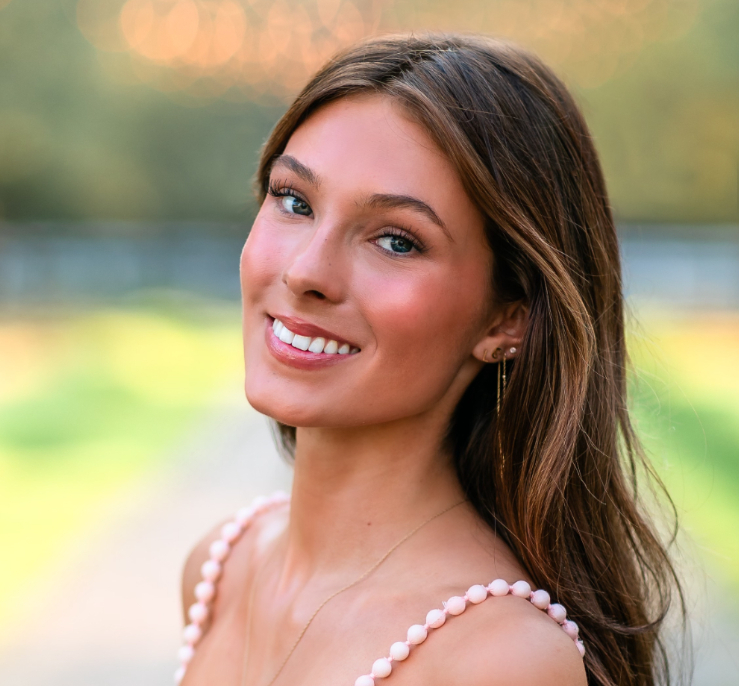
A sermon by Lane Tompkins
I think many of us would agree that my generation has grown up in a strange and often overwhelming world. War, violence, pandemics, politics, and technology have shaped the environment we came of age in, and beneath all of that, each person carries private battles that often go unseen.
For me, life frequently felt like too much at once. University classes, research, volunteering, work, extracurriculars, friendships, and college applications seemed to fill every second of my life these past few years. There were moments when everything blurred together, when the future felt uncertain, distant, and overwhelming.
And yet, almost every Sunday morning, we carved out an hour and a half to be here together.
This space became something steady in a life that often felt anything but. It offered peace, reflection, repentance, and clarity before returning to the chaos waiting beyond these walls. Throughout my life, I have spent hours in this sanctuary: sitting in the pews, serving behind the altar, and standing alongside other acolytes.
I would be lying if I said I loved every minute of it.
There were certainly mornings filled with eye rolls in the car, moments of anxiety over whether I would bring the wine at the wrong time, miss a cue, or even tie my robe incorrectly. For a long time, I focused more on doing everything right than understanding why I was here at all.
But over time, my understanding began to change.
Being Episcopal taught me something far more meaningful than routine or responsibility. It taught me how to sit with uncertainty. It taught me to reflect instead of react. It taught me that faith does not demand perfection, and that belonging does not require certainty.
As I grew older, I began noticing how different St. Andrew’s felt from many other churches my friends attended. Their services were often more casual, their messages more direct, and their sermons centered around telling others how to live as God’s children.
I remember feeling confused by that contrast.
How could we believe in the same God, yet practice faith in such different ways?
At St. Andrew’s, I was not taught to pressure others into belief. I was never taught to measure someone’s worth by their choices, circumstances, or struggles. I never felt the need to prove my faith outwardly or define it for anyone else.
Instead, I was taught something much more difficult.
I was taught to accept people as they come.
And the more I grew in my faith, the more I realized how deeply rooted that idea is in the Gospel itself. Again and again, Christ meets people exactly where they are. Not once they are perfect. Not once they have fixed themselves. Not once they finally become worthy enough.
He meets them first.
Tax collectors. The sick. The grieving. The ashamed. The doubting. The outcast. People who were judged long before they ever entered a temple.
And instead of asking them to prove themselves before receiving love, He simply says, “Come.”
For a long time, I struggled to see that grace in others.
I have always been an honest and logical person, sometimes to a fault, and I often questioned why people felt the need to impose their beliefs, judge the lives of others, or speak with certainty about paths they themselves had never walked.
I could never reconcile how judgment and negativity could exist within something rooted in compassion.
But what I eventually came to understand is that faith is not about having all the answers. It is about choosing how you show up in the world.
It is about leading with love instead of judgment. It is about recognizing that every person carries a story far deeper than what we can see. And above all, it is about trusting that God’s role is not ours to take.
Eventually, those lessons became more than ideas I heard from the pews. They became the very things that carried me through one of the hardest periods of my life.
Not long ago, there was a time when I felt completely lost. I remember feeling exhausted in a way that sleep could not fix, quietly battling an illness that slowly convinced me I was never enough. There were long stretches of time when I felt hopeless, disconnected from myself, and uncertain whether there was anything ahead worth reaching for.
In those moments, I did not feel strong. I did not feel certain. I did not even feel close to God in any traditional sense.
And yet, something still called me to keep showing up.
Many of you watched me sit in these pews week after week, from childhood into adulthood, without ever fully knowing what I carried internally. I often said nothing, but this space still held me. Even when I did not feel connected to God, I remained surrounded by something steady: a community that never demanded I explain myself before belonging.
Slowly, that began to change.
I came to understand that I did not need to control everything to be okay. I began to understand that I did not need to be perfect to be worthy. Most importantly, I began to understand that faith is not really about certainty at all, but about trust.
Trust that life can still hold meaning in moments of pain. Trust that our struggles are not meaningless. Trust that God can still be present, even when we cannot clearly see Him.
For a long time, I thought faith meant eventually finding answers for suffering. What I have come to believe instead is that faith is learning how to keep living with compassion, humility, and hope even when the answers are unclear.
It is trusting that pain and purpose can exist alongside one another.
And that God does not abandon us simply because life becomes difficult.
Looking back now, I see that period of my life entirely differently. What once felt like failure became the time that taught me the most and, strangely, the time that deepened my faith the most as well.
It taught me patience with myself. It taught me how to recognize hidden pain in others. It taught me that each and every person in this room is navigating something far deeper than what we see on the surface.
That is what St. Andrew’s has taught me.
It taught me to pause before judging. To listen before assuming. To approach others with humility instead of certainty. It taught me that acceptance is not passive; it is an active choice we must make every single day.
And honestly, I think it is a choice our world has deeply struggled to make.
We live in a time where people hurt others in the name of belief. Where judgment is immediate and empathy feels increasingly rare. Where my generation, despite being more connected than ever, often feels profoundly alone.
But amidst all the chaos, there is never too little time to change how we show up in the world.
There is still time to choose kindness over judgment. Understanding over assumption. Compassion over certainty. There is still time to love people without demanding they prove themselves worthy of it first.
Because that is what Christ did. He met people where they were.
And I believe we are called to do the same.
As I move into the next stage of my life, into college and whatever comes after, I know there will still be uncertainty.
In many ways, uncertainty may be the only thing that is truly certain.
There will still be moments where I feel unprepared, lost, or unsure of where I am headed. But I no longer believe I need to have everything figured out.
I only need to trust.
To trust in God. To trust in the path unfolding before me. And to trust that even small acts of compassion can reach further than we will ever fully know.
Because ultimately, I do not believe faith is best expressed through certainty or control. Instead, I feel called to live it.
To trust that God works through the way we treat people. Through humility. Through grace. Through moments of compassion so small they may seem insignificant at the time.
And long after I leave this place, I think that is what I will carry with me most.
Not perfection. Not certainty. But the understanding that people deserve to be loved as they are.
I want to end with a quote often recited by our former priest, Father Richard, one that I hope all of us carry with us today and every day:
“Life is short, and we do not have much time to gladden the hearts of those who travel the journey with us. So be swift to love, and make haste to be kind.”
In the name of the Father, and of the Son, and of the Holy Spirit. Amen.

About the Author
Lane graduated Summa cum laude from Isaac Bear Early College High School on May 15th of 2026. She is attending UNC Chapel Hill in the Fall with auto-admission to the Kenan-Flagler Business School where she plans to double major in Business and Finance.


Comments